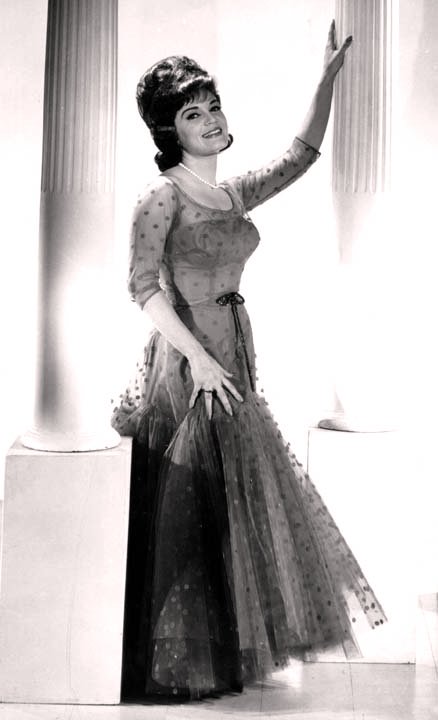
Showing posts with label Connie Francis. Show all posts

Wednesday, March 13, 2013

Happy Birthday, Neil Sedaka

Our first glimpse at Neil Sedaka was the unfortunate cover image that graced the 8-track edition of Sings His Greatest Hits, an early 1970's reissue of Sedaka's late 1950's/early 1960's chart-toppers. Frankly, he looked like a remarkably young and hairless Ron Jeremy recreating the Mona Lisa.


We were, however, rather taken with the music contained on that 8-track. Our musical tastes are far-reaching, sometimes inexplicable, often with very specific sub genres. For instance, count us among the proud, few fans of what can only be described as adenoidal white bread pop, ideally recorded in New York between 1960 and 1963. (According to "real" music historians, this period between Elvis and The Beatles actually doesn't exist. Ahem.) 


Sneer if you will, but dig those double-tracked vocals! that big RCA Victor production sound! more irresistibly goofy (and catchy) hooks than a bait and tackle shop! This stuff must have sounded fantastic blaring out of a pizza parlor jukebox in 1961, or on an AM transistor radio -- or, in our case, on an 8-track in our mother's Laredo Tan 1973 Cadillac Coupe de Ville. The point is, pure, unadulterated pop has its own merits, and can't be judged by the same yardstick as jazz, blues, soul or rock, any more than disco can be debated in the same breath as opera. And of the many fresh-faced young men and women purveying this assembly line of Brill Building confectionary in those historically-neglected early 60's, Neil Sedaka was arguably doing it better than just about anyone else -- with the possible exception of his contemporary and rival, Gene Pitney.

 Contemporaries: Gene Pitney (left) and Neil Sedaka

What set Sedaka and Pitney apart from the rest of the pack was the fact that they could write their own material -- and they were damn good at it. When the hits dried up for the original crop of Philadelphia-based teen idols, Frankie Avalon, Fabian and Bobby Rydell, they had neither a relationship with New York's legendary stable of writers and producers at the Brill Building, nor their own songwriting skills to fall back on. (Luckily for Frankie, an ex-Mouseketeer and a little something called Beach Party was looming in the B-movie future.) Sedaka and Pitney not only could theoretically save the best of their compositions for themselves, but they weren't exactly Scrooges in doling hits out to others. You may not consider yourself fans of either gentlemen, but if you've ever hummed along to "He's a Rebel" by the Crystals or "Hello, Mary Lou" by Ricky Nelson, you may thank Mr. Pitney. And for those of you who have sung along to "Stupid Cupid" or "Where the Boys Are" by Miss Connie Francis -- well, Neil Sedaka, songwriter, thanks you for the royalties.

We assume that Sedaka ignored the typo on his credit and laughed all the way to the bank.

The hits, of course, did eventually end, although once Beatlemania gripped the States, the end wasn't as swift as many would imagine for Sedaka and his ilk. If he was no longer reaching #1, Sedaka could still point to three mid-sized hits in 1964. He also remained in demand as a concert draw and, most interestingly, on television. Sedaka was enthusiastically received on teen dance programs from American Bandstand to more localized shows well into the second half of the 1960's. Sometimes he had a new single to promote, but more often than not, he would sing (or lip-sync) one of his greatest hits from several years back, while scores of mod-looking teens in mop tops and mini skirts frugged around him -- presumably the same ones who had sworn off anything remotely non-Liverpudlian. 
Neil Sedaka performing his 1962 #1 hit on local Miami, Florida television, 1966

There's a second act revival in the Sedaka saga, of course; a big rebound in the 1970's, helped along by an endorsement and encouragement from Elton John; writing and recording material that practically is a 1970's easy listening greatest hits rundown: "Solitaire," "Laughter in the Rain," "The Hungry Years," "Love Will Keep Us Together." But because here at Stirred, Straight Up, it is permanently 1962, we end our very small tribute to just one facet of Mr. Sedaka's accomplishments thus. We leave you with perhaps our favorite Neil Sedaka clip; it dates from late 1964, as he performs the "bubbling under" #104 hit, "I Hope He Breaks Your Heart." It's a relentlessly cheerful kiss-off ditty which manages to combine somewhat-dated Brill Building pop with vaguely Motown-ish flourishes, while our birthday boy seems to be practicing his Judy Garland gestures. Enjoy, darlings!


NEIL SEDAKA
March 13, 1939

Thursday, April 7, 2011

Follow the Boys?

One of our readers sent in this fabulous image of a swingin' sixties sister that we missed: the one and only Connie Francis, appearing on an episode of Bob Hope Presents the Chrysler Theatre in 1966 entitled "The Sister and the Savage." (We assume that she essayed the former role.) Incidentally, in real life, La Franconero's reel life sorority sister from Where the Boys Are (1960) also got the habit, and is now Reverend Mother Dolores Hart!


Wednesday, December 15, 2010

Who's Sorry Now?


She could sing pop, rock, country, jazz and R&B. She translated her hits (all 35 million records' worth of 'em) into French, Spanish, Italian, Japanese, and German. She was the first female pop-rock superstar, one as comfortable on the set of American Bandstand as she was on the stage of The Sahara in Vegas. She was the girl next door in a prom dress and pearls, and a larger than life diva with hair to match. She is Connie Francis, and she was our latest Mystery Guest!


It's this dichotomy in her public image -- Doris Day, by way of Annette Funicello, with a large helping of Agnes Moorehead-as-Endora anachronistic glamour -- that make Connie Francis' paper dolls so much fun, along with your guesses! Any one celebrity whose wardrobe calls to mind perky Debbie Reynolds, wacky Lucille Ball, frilly Loretta Young and Amazonian Julie Newmar is tops in our book.


From the start, there was something different about Connie Francis. Among the homogeneously pretty, blond-and-blue-eyed ingenues crowding the music, television and film industries when she came along in the 1950's, Connie, with her proud Italian-American heritage and dark, ethnic beauty, stood out among the Tuesday Welds and Sandra Dees. And then there was that voice -- a voice which seemed to incongruously belong to a junior Judy Garland or a femme Al Jolson. Like her equally talented contemporary, Brenda Lee, Connie was the proverbial Little Lady with the Big Voice -- but, unlike Brenda, Connie's versatility was so astonishing, it was almost self-parody. Connie Francis Sings Italian Favorites. Sings Jewish Favorites. Sings Irish Favorites. Sings German Favorites. Sings Folk Songs Favorites. There were Fun Songs for Children, and Award Winning Motion Picture Hits, and Country Music, Connie Style. In a delicious bout of musical schizophrenia, she was Hawaii Connie and Connie Francis On Broadway Today and Connie Francis at the Copa and A New Kind of Connie. If you were a Connie fan, you could Do the Twist!, or indulge in Greatest American Waltzes.


Frankly, we find Connie the most interesting after her chart success fell into sharp decline around 1964. All of her major, teen-oriented hits were well behind her ("Who's Sorry Now," "Stupid Cupid," "Lipstick on Your Collar," "Where the Boys Are"), but Connie continued to be a major concert and nightclub draw, as well as a prolific albums artist. She always had a hipper cachet than, say, Vikki Carr or Eydie Gorme; but listening to her splendid recordings of such standards as "Stardust," "The Shadow of Your Smile," and "Where Can I Go without You," or watching her performances on the variety shows of the day, it's clear that Connie relished the chance to really show off her jazzy, cabaret bent.


There's an image embedded in the public consciousness of a maudlin Connie Francis sobbing her way through a soggy ballad; and it's undeniable that quite a few numbers in the Franconero repertoire have a healthy dollop of sentimentality. The singer's own well-publicized woes -- a brutal 1974 rape which effectively ended her performing career for half a decade; her brother's murder at the hands of the Mafia; four failed marriages and seventeen involuntary stays in mental institutions -- only serve to burnish her reputation as, if not necessarily tragic, a tragedienne in the most dramatic sense. But Connie Francis is made of stronger stuff than that. What we love most is her chutzpah -- the ballsiness and salty humor she hid behind the bouffants and crinolines, which served her well in going toe-to-toe with MGM Records executives, truculent musicians and songwriters, and her irascible father, with whom she shared a complicated, love-hate relationship. She blazed a trail for every female pop-rock star to follow, and she did it on her own terms, called all the shots, studied every detail -- and still remained a lady. Not incidentally, she also did it in a variety of fabulous Don Loper frocks, with enough chiffon swags, net panels and fur trim to make Danny LaRue sigh with envy.

The mysterious Plum was the first to correctly guess Connie's identity -- so we extend our congratulations and huzzahs as we pack Plum off on full scholarship to the Joey Josephs Connie Francis Impersonators Academy. We can scarcely wait to see the results!


As always, thanks for playing, darlings! We had a lot of fun with this one. Here's a little more Connie Couture for inspiration.


Thursday, September 9, 2010

Monday, July 19, 2010

Summer Vacation


Darlings, we're taking a brief hiatus from posting for a while. Not terribly long; just enough to recharge our fabulosity batteries. We'd also like to send birthday wishes out to a dedicated follower of SSUWAT!


See you soon, possums!

Monday, April 26, 2010

Tuesday, March 2, 2010

Connie's Casting Couch


Connie Francis shows us how she screened the four gay porn stars who escorted her to the recent 50th anniversary party for Where the Boys Are (1960). We just love this dame, for reasons best summed up by our friend Drew: "...her superhuman ability to navigate through life in a long slit skirt, 3-1/2 inch spiked stiletto heels, and a towering bouffant without toppling over. I couldn't do that." Oh, Drew dear, we beg to differ, but we agree on La Franconero!

Thursday, January 14, 2010

The Look of the Year


But, really, sequined, tassled epaulets are timeless and shouldn't be confined to one year.

Wednesday, February 18, 2009

La Franconero


Everybody's Somebody's Fool, so blame Stupid Cupid for our Second Hand Love for Connie Francis (just Don't Break the Heart That Loves You). Although we'd rather Follow the Boys while Looking for Love, La Franconero's voice is treasured Among Our Souvenirs. Time Alone Will Tell just exactly When the Boys Meet the Girls, but We Have Something More (Than a Summer Love) -- and besides, Who's Sorry Now?

Tuesday, September 16, 2008

Bravi

In searching for images of birthday boy George Chakiris (September 16, 1934), we stumbled across a fabulous site which featured, among others, a gallery of a German fan magazine called Bravo. Their aesthetic began and ended with tawdry, Confidential-style montages of unflattering papparazzi snaps, but for a golden epoch from the early-to-mid 1960's, they produced such lovely images as these: